博文
2026年02月嘲风作品集(二)
||
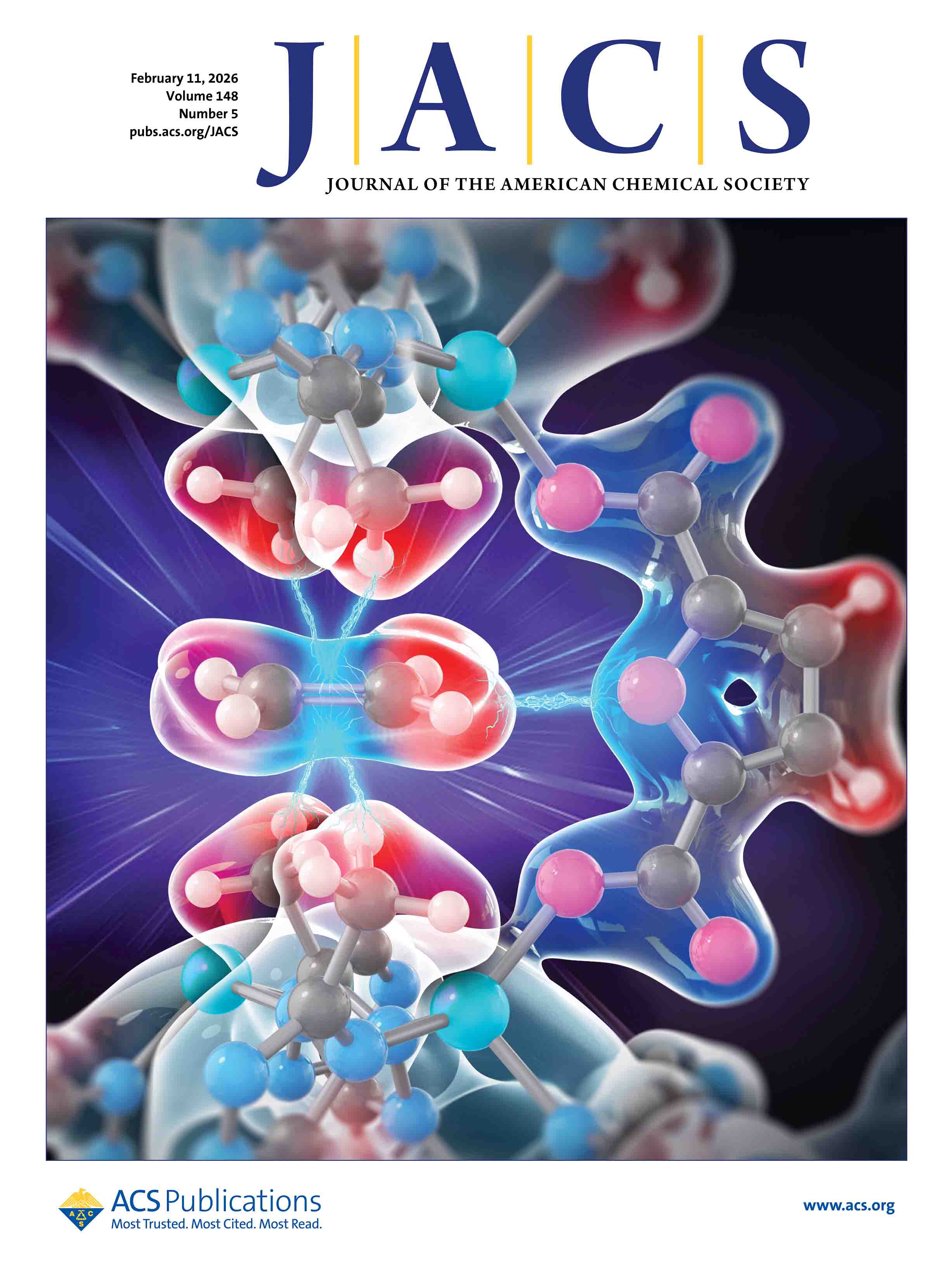
Complementary Adsorption within Metal–Organic Frameworks for Ethylene Upgrading from Refinery Dry Gas
Tangyin Wu,Dengzhuo Zhou,Zhenglu Yang,Yechen Liu, Pengyuan Yin, Kun Lu, Fangyao Jiang, Fangyao Jiang, Xian Suo, Lifeng Yang, Xili Cui, and Huabin Xing
Molecule-specific adsorption offers an efficient approach for target molecule purification from complex mixtures that demand a series of energy-intensive separation units. However, existing separation mechanisms that discriminate molecular sizes or functional groups are generally unable to achieve molecule-specific adsorption due to insufficiently identified molecular information. We reveal the complementary adsorption mechanism that discriminates molecules through surface electrostatic potential and molecular shape, covering more comprehensive physical and chemical molecular properties, and realizing precise molecular recognition. The constructed novel porous material ZU-501, which exhibits electrostatic potential and shape complementarity toward ethylene, first realizes ethylene-specific adsorption from typical ethylene mixtures, including C1–C4 paraffins and olefins, and carbon dioxide. The practical use potential of ZU-501 for one-step ethylene recovery from a refinery dry gas is validated by scale-up breakthrough experiments and pressure swing adsorption modeling. This work paves an important avenue for the efficient utilization of low-concentration ethylene resources from diverse scenarios.
https://pubs.acs.org/doi/10.1021/jacs.5c18112
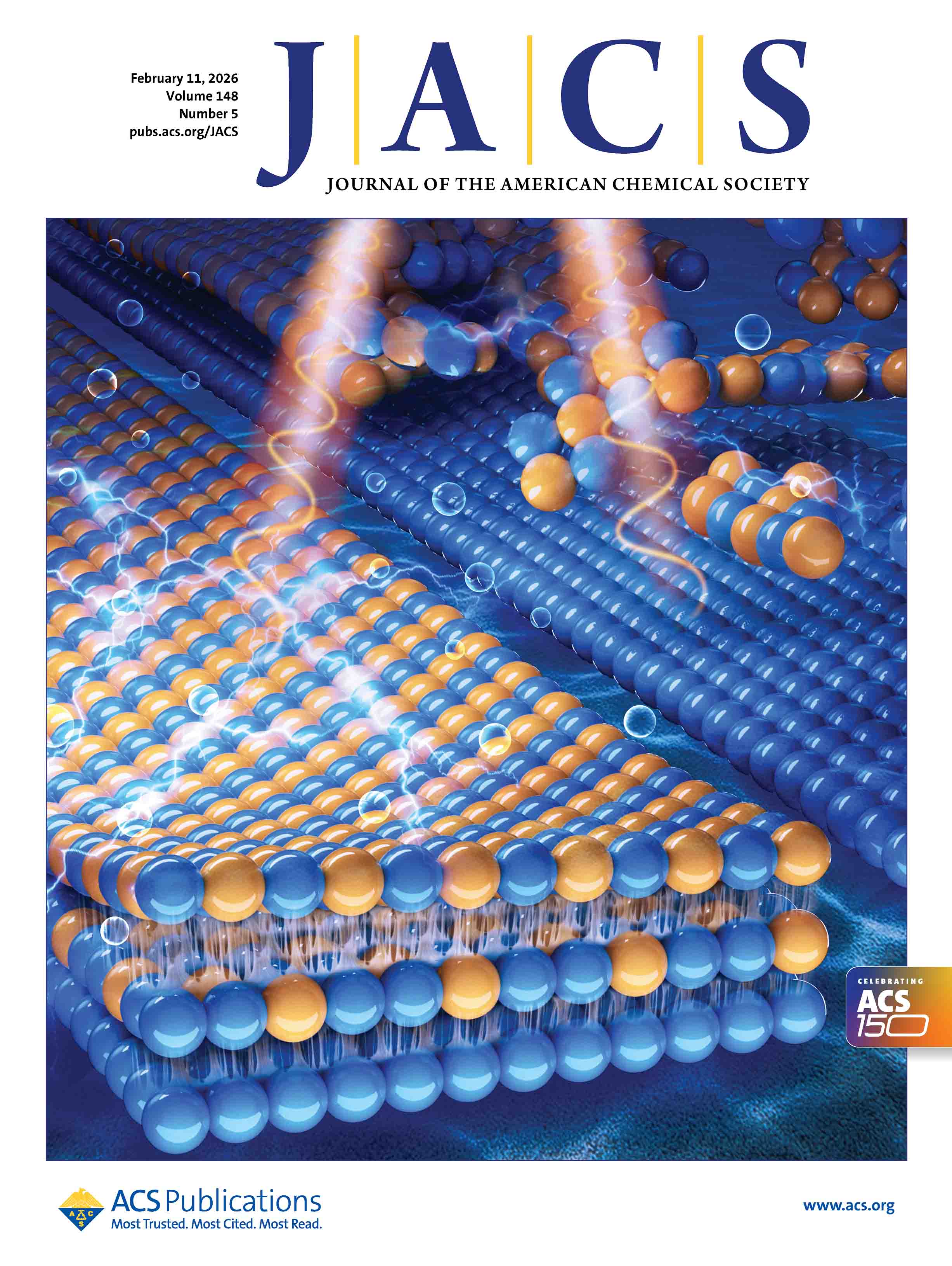
Heterointerface-Enabled Anti-Reverse-Current Electrodes for Alkaline Water Electrolyzers at 1000 mA cm–2
Wenjun He, Yueshuai Wang, Yilong Zhao, Cheng Tangt, Linchuan Cong, ChangliWang, Yue Lu, Xin Liu, Juncai Dong, Serhiy Cherevko, Qingsong Hua, and Qiang Zhang
Achieving stable and efficient alkaline water electrolysis (AWE) under fluctuating renewable energy inputs is essential for large-scale green hydrogen production. However, frequent shutdown-induced reverse current (RC) effects pose significant challenges to electrode durability. Here, we introduce a gradient interlayer engineering strategy to develop robust AWE electrodes that intrinsically resist both electrochemical reconstruction and mechanical fatigue. By constructing a dense interlayer with Ni(112̅)/Ni3S2(1̅20) heterointerfaces, the electrode demonstrates high catalytic activity (1.79 V @1000 mA cm–2─meeting the U.S. DOE 2026 target), excellent operational stability (>1500 h at 1000 mA cm–2 in 30 wt % KOH at 80 °C), and exceptional RC resistance for 3600 accelerated startup/shutdown cycles. Mechanistic studies through cross-sectional characterizations and theoretical calculations reveal that the seamless interlayer at the catalyst–substrate interface enhances interfacial adhesion, mitigates lattice mismatch, and facilitates charge redistribution, ensuring robust stability and integrity even under operational strains and potential reversals. This work establishes interface crystallography as a design paradigm for durable electrodes, potentially overcoming the stability–activity dilemma toward industrially relevant electrolyzers coupled with fluctuating renewable energy sources.
https://pubs.acs.org/doi/10.1021/jacs.5c17603
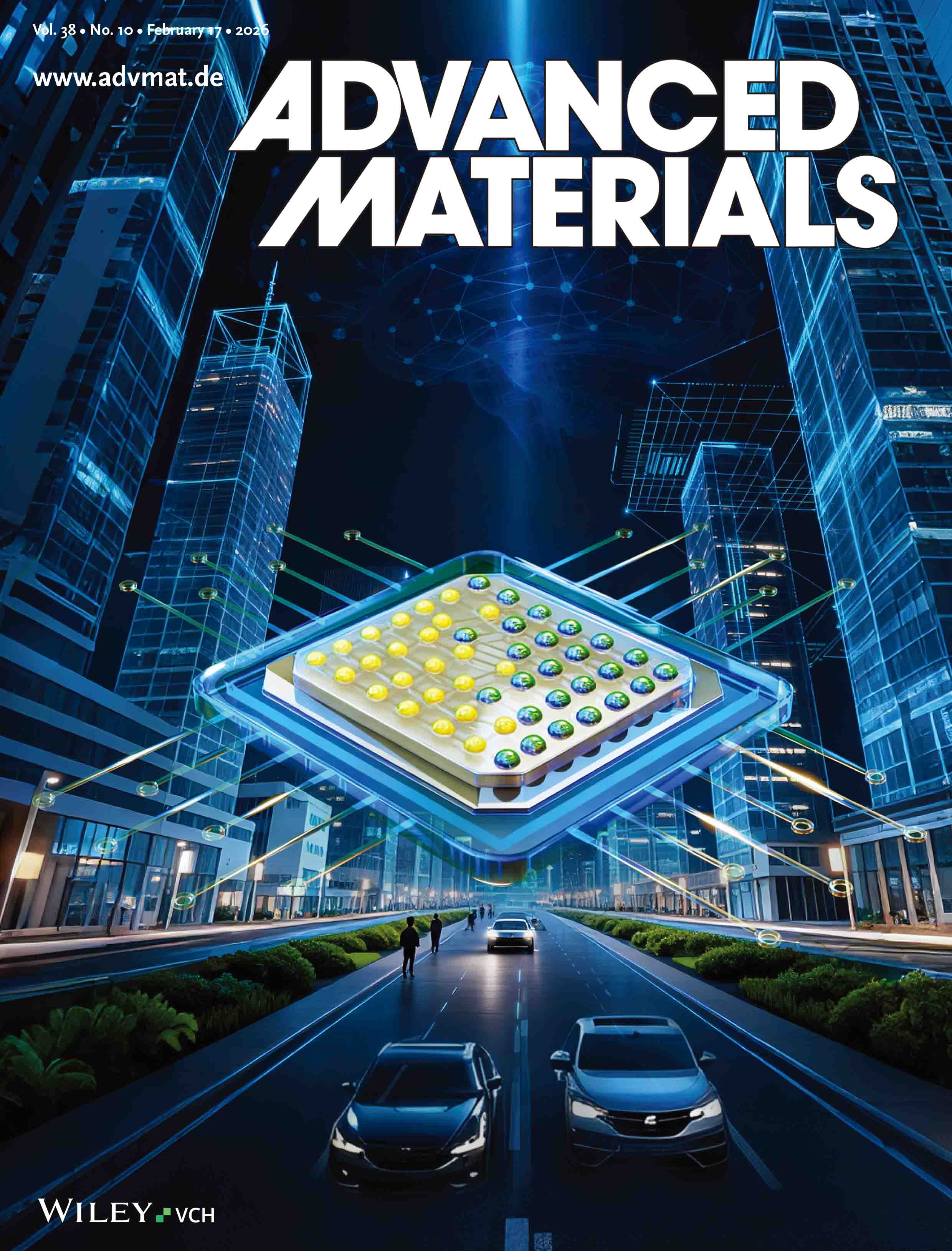
2D Vanadium Carbide/Oxide Heterostructure-Based Artificial Sensory Neuron for Multi-Color Near-Infrared Object Recognition
Yuanduo Qu, Mengdi Hao, Haoran Hao, Shanwu Ke, Yang Li, Chen Wang, Yongyue Xiao, Boshi Jiang, Kaiming Zhou, Baofu Ding, Paul K. Chu, Xue-Feng Yu, Jiahong Wang
Multi-Color Near-Infrared Object Recognition
Jiahong Wang and co-workers synthesized a vanadium carbide/oxide heterostructure via topochemical conversion, combines the NIR responsivity of V2C with the vacancy-driven volatile resistance switching of V2O5−x. The resulting memristor exhibits a linear correlation with light power and wavelength modulation, allowing for robust multi-color object detection in complex scenarios. More details can be found in the Research Article (DOI: 10.1002/adma.202512238).
https://advanced.onlinelibrary.wiley.com/doi/10.1002/adma.72276
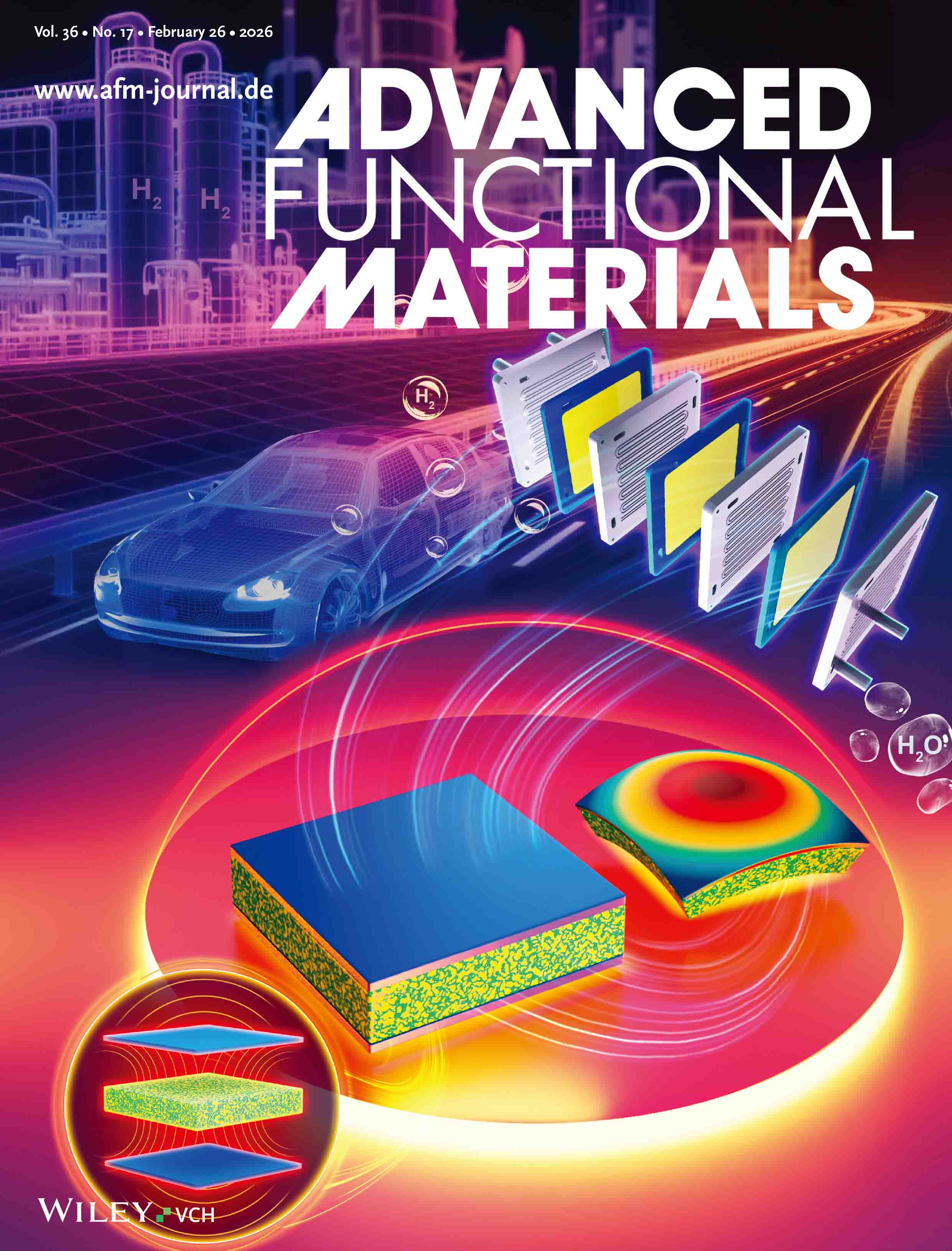
▲ Vol 36 Issue 17 | 26 February , 2026
Innovative Symmetrical Electrolyte Architecture Enables Ultra-Flat and Thermal Resilient Protonic Ceramic Electrochemical Cells
Haixia Li, Wei Wu, Xinfang Jin, Wei Tang, Yasser Shoukry, Wuxiang Feng, Zeyu Zhao, Wenjuan Bian, Fan Liu, Quanwen Sun, Wanhua Wang, Samuel Koomson, Yuchen Zhang, Michael T. Benson, Fanglin Chen, Dong Ding
Protonic Ceramic Electrochemical Cells
In their Research Article (10.1002/adfm.202513396), Fanglin Chen, Dong Ding, and co-workers present a symmetry-engineered double-sided electrolyte design that enables large-area, curvature-free protonic ceramic electrochemical cells (PCECs). By balancing shrinkage dynamics on both sides of the cell, this strategy effectively suppresses thermally induced warping and delivers ultra-flat, stack-ready devices. Such dimensionally stable PCECs provide a robust platform for efficient stack integration, opening new avenues for scalable hydrogen production and advanced chemical conversion technologies at intermediate temperatures.
https://advanced.onlinelibrary.wiley.com/doi/10.1002/adfm.74361
<静远嘲风-南京>设计制作
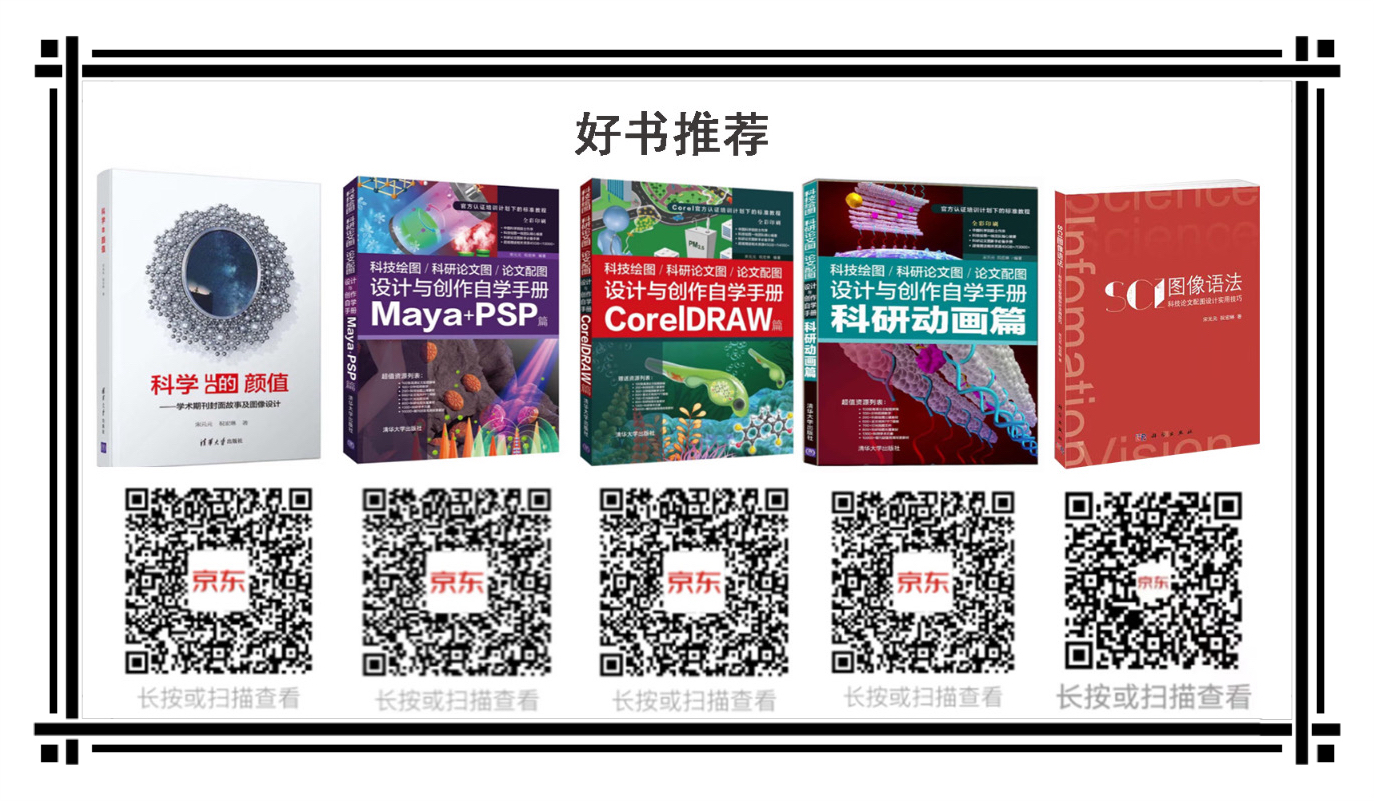
购书链接:
☆科学的颜值:学术期刊封面故事及图像设计
https://item.jd.com/12802188.html
☆科技绘图/科研论文图/论文配图设计与创作自学手册:CorelDRAW篇
https://item.jd.com/13504674.html
☆科技绘图/科研论文图/论文配图设计与创作自学手册:Maya+PSP篇
https://item.jd.com/13504686.html
☆科技绘图/科研论文图/论文配图设计与创作自学手册:科研动画篇
https://item.jd.com/13048467.html#crumb-wrap
☆SCI图像语法-科技论文配图设计使用技巧
https://item.jd.com/10073529532924.html?bbtf=1
静远嘲风-南京(MY Scimage) 成立于2007年,嘲风取自中国传统文化中龙生九子,子子不同的传说,嘲风为守护屋脊之瑞兽,喜登高望远;静远取自成语“宁静致远”,登高莫忘初心,远观而不可务远。

学习更多绘图教程关注:


https://wap.sciencenet.cn/blog-519111-1527507.html
上一篇:2026年02月嘲风作品集(一)
下一篇:细胞活力助力单细胞代谢分析新突破