博文
2026年02月嘲风作品集(一)
||
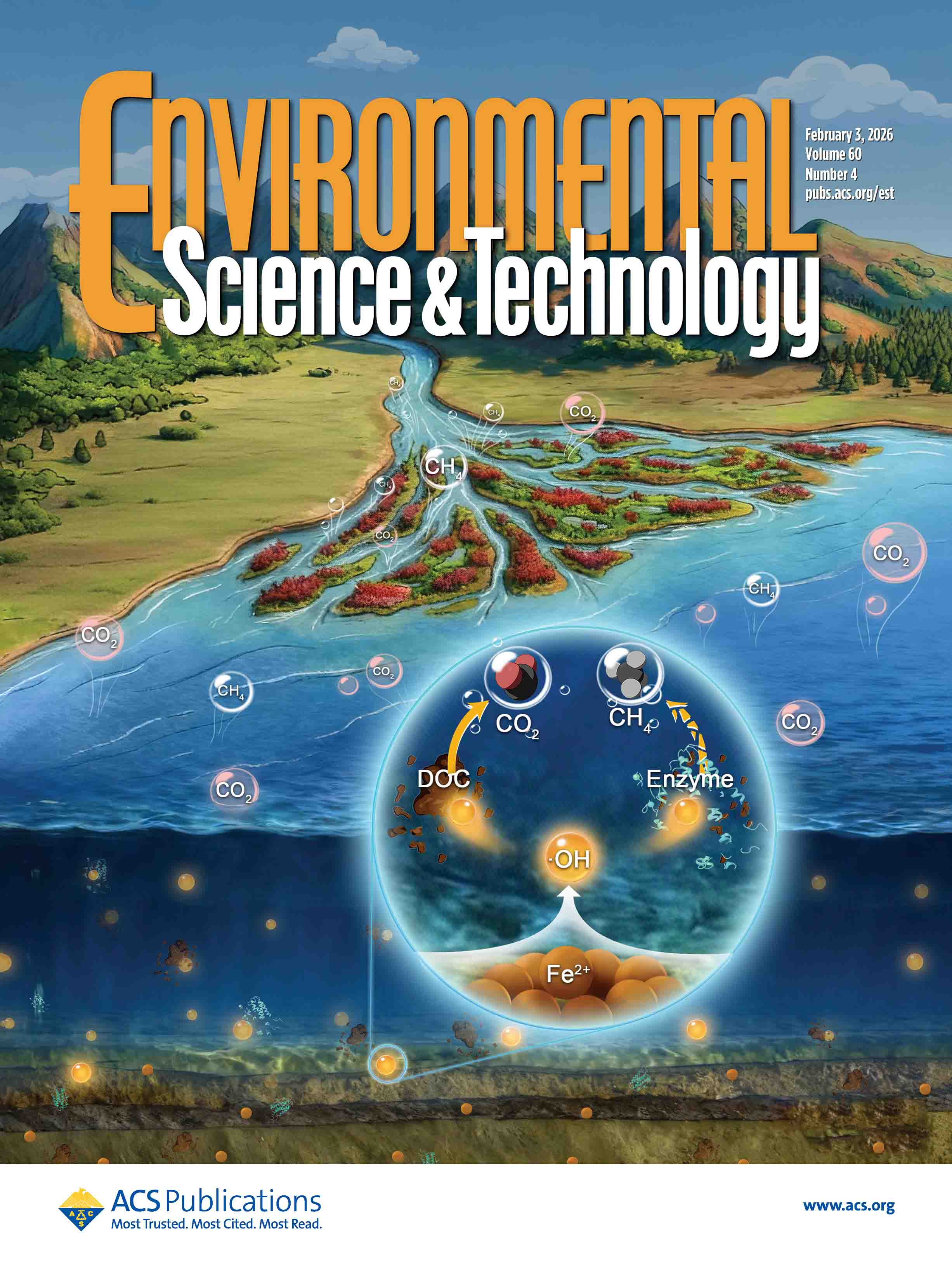
Biogeochemical Trade-Off in a Dual-Coupling Oxidative Model: How Hydroxyl Radicals Govern Greenhouse Gas Emission in Coastal Wetlands across a Salinity Gradient
Xiaojin Hu, Jingyuan Yue, Zizhang Guo, Haiming Wu, Zhen Hu, Huijun Xie, Jian Zhang
Coastal wetlands are major sources and/or sinks of greenhouse gases (GHGs), yet the role of abiotic oxidants like hydroxyl radicals (·OH) in regulating these fluxes, especially across salinity gradients, remains poorly understood. Here, we reveal that ·OH is a pivotal biogeochemical agent whose function is governed by a “dual-coupling oxidative model”. External coupling is demonstrated by salinity acting as a master variable, driving a significant increase in ·OH production potential. This salinity-driven gradient of oxidative pressure then interacts with the internal coupling─the functional duality of ·OH─to produce divergent GHG dynamics. For CO2, net promotion (contributing an average of 9.38 ± 3.92%) resulted from a trade-off where direct abiotic mineralization overcame the suppression of C-degradation enzymes. In contrast, ·OH acted as a net suppressant of CH4 emission, an effect predominantly driven by biotic responses. For N2O, an apparent promotion (contributing 4.36 ± 4.39%) resulted from a powerful indirect effect via suppression of its sink enzyme, which overwhelmed a direct chemical inhibitory path. Ultimately, the magnitude of the ·OH effect on GHG fluxes was codetermined by initial abiotic (23–41%) and biotic (14–29%) conditions. Our model provides a new framework for understanding abiotic–biotic interactions and predicting blue carbon ecosystem responses to global change like seawater intrusion.
https://pubs.acs.org/doi/10.1021/acs.est.5c15021

Sensitized mast cells for targeted drug delivery and augmented cancer immunotherapy
Yan Xu, Xiaoge Zhang, Xiao Han, Hanwei Huang, Chaoyang Meng, Yinxian Yang, Tao Sheng, En Ren, Jiaqi Shi, Kaixin He, Dong Cen, Peng Zhao, Weijia Fang, Hongjun Li, Yuqi Zhang, Xiujun Cai, Funan Liu, Jicheng Yu, Zhen Gu
Cell-mediated drug-delivery systems have garnered significant attention for their potential to boost therapeutic efficacy in cancer treatment. Here, we engineered immunoglobulin E (IgE)-sensitized mast cells (IgE-MCs) to achieve antigen-guided delivery of oncolytic adenoviruses (OVs) and local immune activation. By harnessing tumor-specific antigens as allergens, IgE-MCs accumulated at antigen-positive tumors, enabling targeted OV delivery and releasing chemokines and inflammatory mediators that remodeled the tumor microenvironment. IgE-MCs encapsulating OVs induced robust anticancer immune responses and inhibited tumor growth in several murine models. Of note, in a humanized human epidermal growth factor receptor-2 (HER2)-positive patient-derived xenograft model, human MCs armed with anti-HER2 IgE and loaded with OVs increased intratumoral T cell responses and reduced tumor growth, demonstrating feasibility in a clinically relevant setting and supporting patient-specific IgE selection. Together, our study highlights the translational promise of IgE-MCs as an antigen-specific delivery platform for cancer immunotherapy.
https://www.cell.com/cell/abstract/S0092-8674(25)01311-X
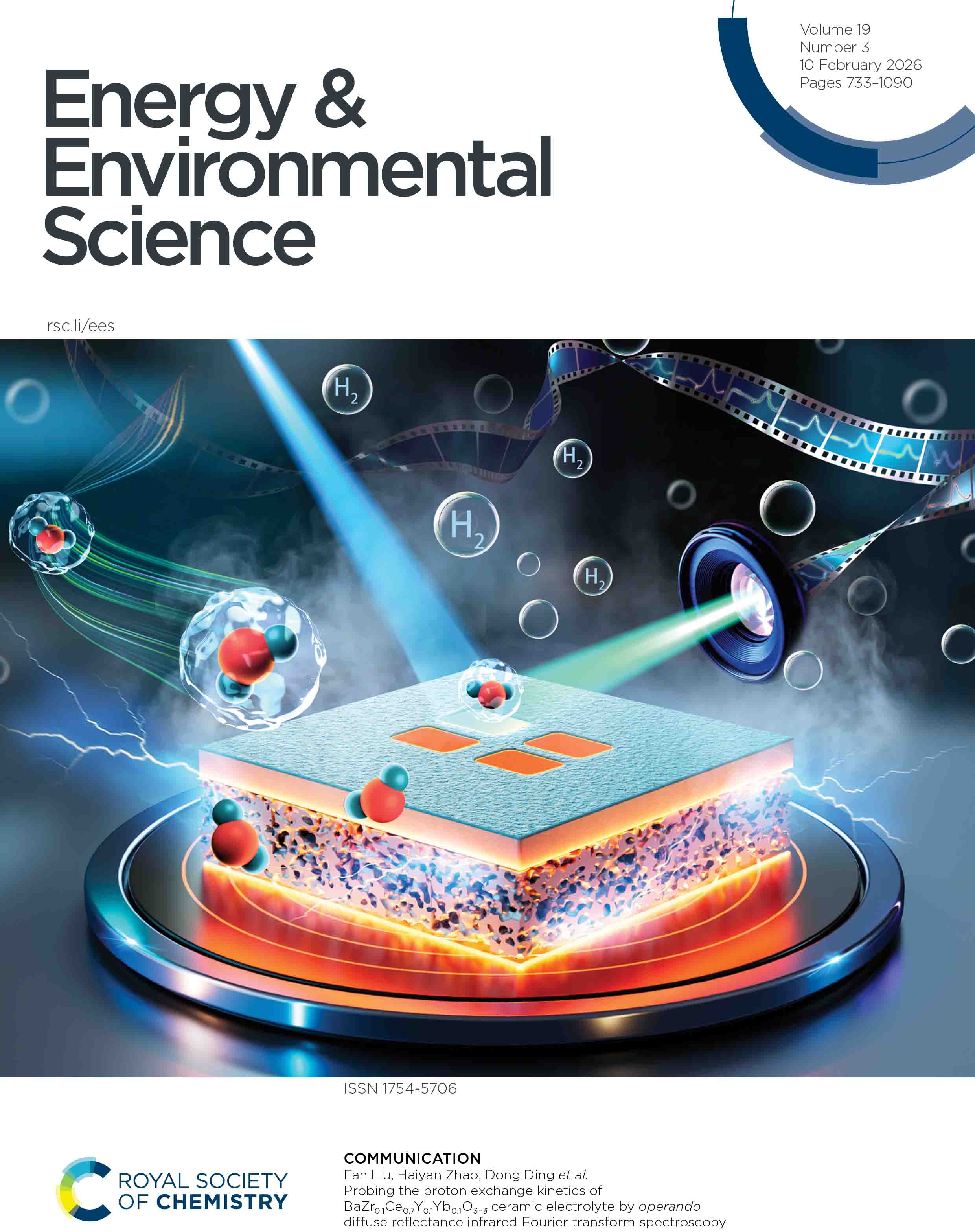
Probing the proton exchange kinetics of BaZr0.1Ce0.7Y0.1Yb0.1O3−δ ceramic electrolyte by operando diffuse reflectance infrared Fourier transform spectroscopy
Yuqing Meng, Fan Liu, Meng Li, Zixian Wang, Hao Deng, Qian Zhang, Haixia Li, Wanhua Wang, Quanwen Sun, Joshua Gomez, Zeyu Zhao, Haiyan Zhao and Dong Ding
Proton exchange kinetics plays an important role in governing the performance of intermediate-temperature protonic ceramic electrolysis cells (PCECs) for hydrogen production. Our understanding of the nature of the surface hydration reaction at the single-cell level, however, remains very limited, hampering further efficiency improvements. Here, we developed a custom operando diffuse reflectance infrared Fourier transform spectroscopy (DRIFTS) platform that operates under high temperature and steam conditions with applied bias. Quantitative investigations of surface H2O/D2O isotope exchange in a BaZr0.1Ce0.7Y0.1Yb0.1O3−δ (BZCYYb1711) protonic electrolyte-based single cell were conducted under different applied voltages using this DRIFTS platform, to gain molecular-level insight into hydration kinetics. The findings show that the application of an external voltage significantly enhances the surface proton exchange rate, decreasing the apparent activation energy from 29.1 kJ mol−1 at open-circuit voltage (OCV) to 6.8 kJ mol−1 at 1.3 V. In addition, distinct voltage-induced spectral shifts in O–D vibrations point to dynamic changes in surface hydration. These findings demonstrate a sensitive spectroscopic platform for probing interfacial proton processes and reveal strong electrochemical control over surface proton kinetics, offering new opportunities for probing electrolyte hydration behavior in PCECs.
https://pubs.rsc.org/en/content/articlelanding/2026/ee/d5ee05957g
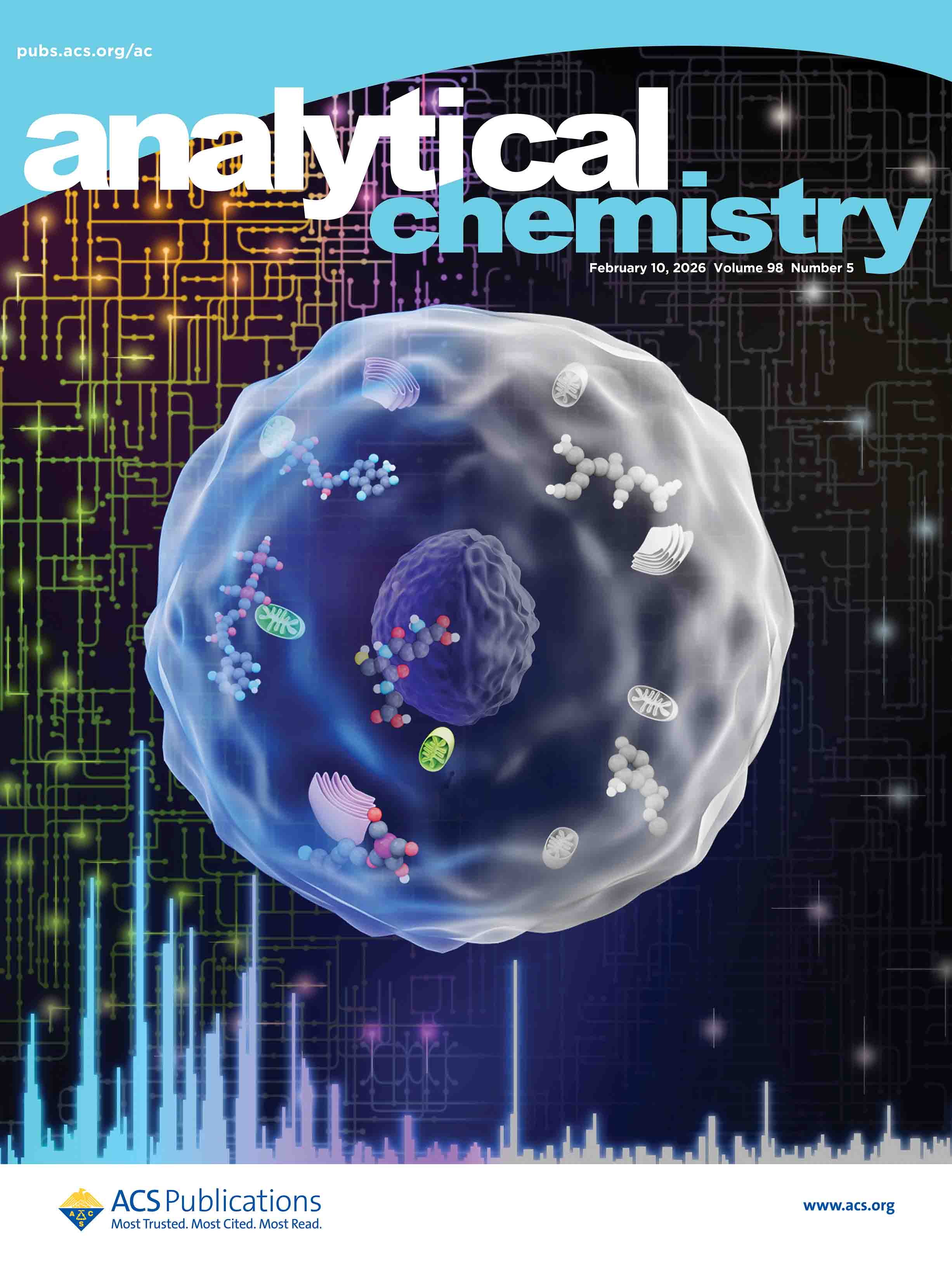
Viability-Informed Single-Cell Mass Spectrometry for More Comprehensive Metabolic Analysis
Simin Cheng, Danni Wu, Xinxin Wang, Siyuan Tan, Lulu Feng, Xiaoping Yu, Xiaoyun Gong, Xinhua Dai
The viability of cells is a key indicator of cellular function and physiological integrity. There are great metabolic differences between live and dead cells. However, most mass spectrometric metabolic studies overlook this issue, leading to a potential misunderstanding of biological systems. Here, we propose the development of a high-throughput and label-free viability-informed single-cell mass spectrometry (ViSCMS) technique for the simultaneous measurement of cell viability and metabolic profiles. The signal of phosphocholine (PC) 34:1 was used for the confirmation of cell events. Glutathione (GSH) was identified as an intrinsic marker to further accurately distinguish live and dead cells. The viability rates obtained by ViSCMS were in good concordance with those of conventional AO/PI staining (mean bias: 0.33%). Excellent reproducibility (SD < 3%) was achieved across multiple cell lines with varied viability rates. The practicality of the method was demonstrated by the successful subtyping of six colorectal cancer (CRC) cell lines. The subtyping could only be achieved when the viability of cells was taken into consideration. Furthermore, clear viability-dependent metabolic differences were observed on HCT116 cells when treated with an anticancer drug. The results provided insights into how tumor cells adapt to chemotherapy stress at the single-cell level.
https://pubs.acs.org/doi/10.1021/acs.analchem.5c07083
<静远嘲风-南京>设计制作

购书链接:
☆科学的颜值:学术期刊封面故事及图像设计
https://item.jd.com/12802188.html
☆科技绘图/科研论文图/论文配图设计与创作自学手册:CorelDRAW篇
https://item.jd.com/13504674.html
☆科技绘图/科研论文图/论文配图设计与创作自学手册:Maya+PSP篇
https://item.jd.com/13504686.html
☆科技绘图/科研论文图/论文配图设计与创作自学手册:科研动画篇
https://item.jd.com/13048467.html#crumb-wrap
☆SCI图像语法-科技论文配图设计使用技巧
https://item.jd.com/10073529532924.html?bbtf=1

静远嘲风-南京(MY Scimage) 成立于2007年,嘲风取自中国传统文化中龙生九子,子子不同的传说,嘲风为守护屋脊之瑞兽,喜登高望远;静远取自成语“宁静致远”,登高莫忘初心,远观而不可务远。

学习更多绘图教程关注:


https://wap.sciencenet.cn/blog-519111-1527506.html
上一篇:科普稿:探索神秘的海洋世界
下一篇:2026年02月嘲风作品集(二)