博文
hLife 最佳论文10篇(2024—2025)揭晓!
|
“hLife 最佳论文(2024-2025)”评选,以多维论文数据表现为依据,通过编委和青年编委遴选与学者投票相结合的双轮机制推选出十篇“最佳论文”。
祝贺入选作者!
2024—2025 hLife 最佳论文
点击文章标题和图片可阅读原文
1. Crucial functions of gut microbiota on gut–liver repair
hLife | 中国医科大学孙逊团队揭示肠道菌群在肠—肝轴修复中的重要作用
(Volume 3 Issue 8, Page 364–385)
通讯作者:郑倩倩、孙逊本文章结合肠—肝轴双向通讯系统探讨了关键肠道菌群和微生物代谢产物之间的相互作用,及其在维持肠道完整性和促进肝脏再生中的关键功能,并对其调控机制和潜在治疗策略进行了深入分析,强调了精准医学框架内个性化微生物干预的前景。该研究对加速基础研究到临床应用的过渡以及防治相关肠、肝疾病提供了理论基础。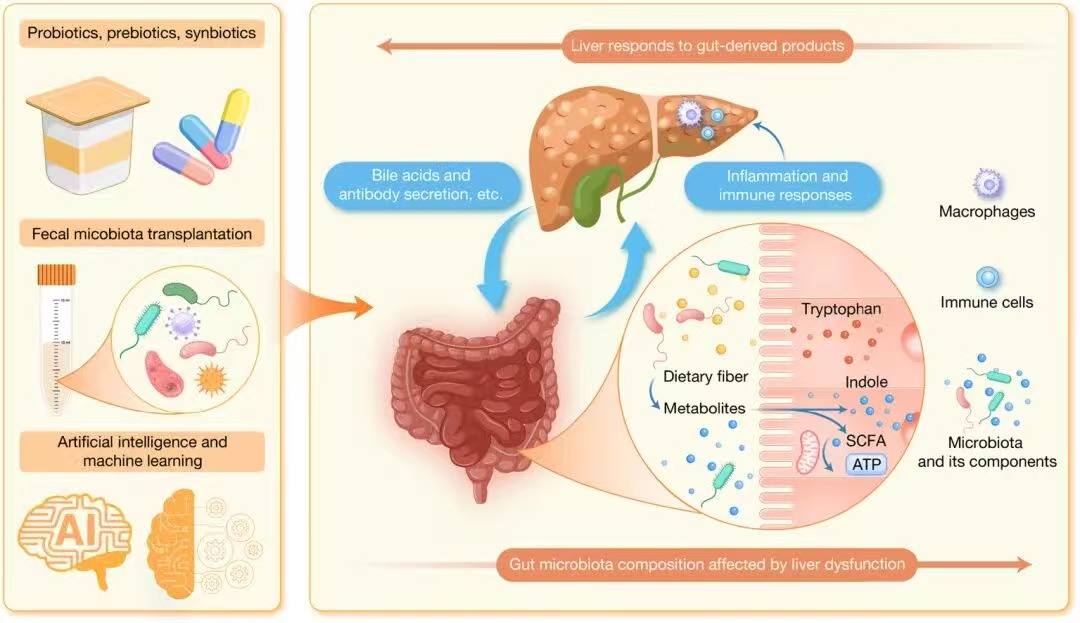
引用:
Wang Y, Yan H, Zheng Q, et al. Crucial functions of gut microbiota on gut–liver repair. hLife 2025; 3: 364–385.2. De novo design of covalent bonding peptides for target protein
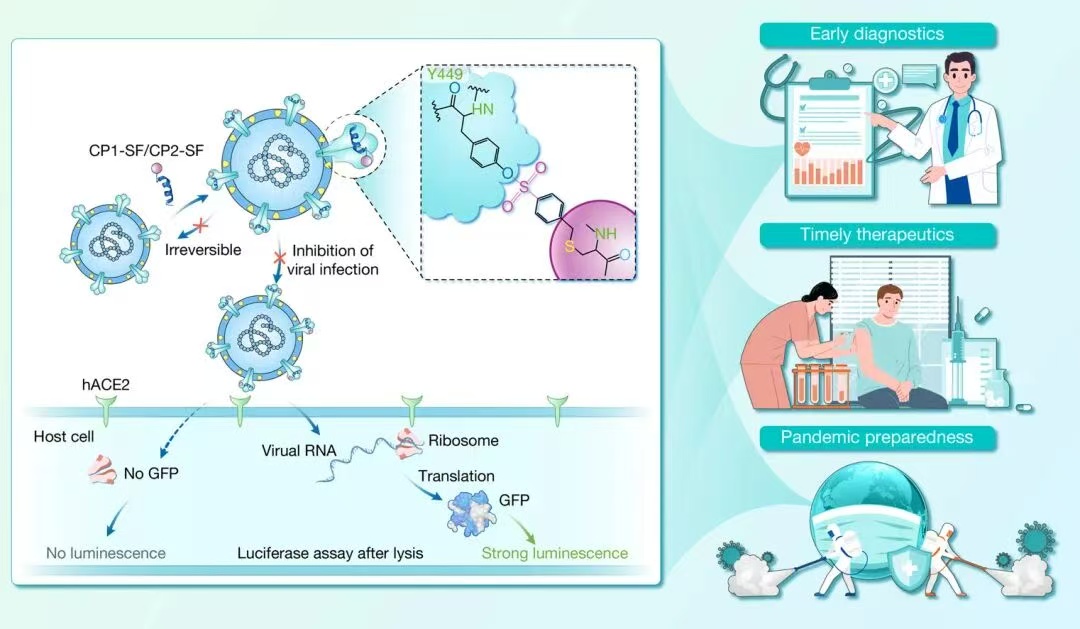
hLife | 周小红/王奇慧等合作开发两步法从头设计的共价键合肽抑制剂
(Volume 2 Issue 12, Page 641–652)
通讯作者:周小红、王奇慧、Lip Ket Chin
引用:
Zhou X, Zhu Q, Zheng A, et al. De novo design of covalent bonding peptides for target protein. hLife 2024; 2: 641–652.
3. Cancer research revolutionized: Unveiling the power of organoids and their therapeutic potential in oncology
hLife Review | 癌症研究的革命: 揭示类器官的力量及其在癌症治疗中的潜力
(Volume 3 Issue 5, Page 216–236)
通讯作者:李敬、周西坤文章综述了类器官的发展历史及其作为研究模型的优势,重点阐述了类器官在癌症发病机制研究及治疗中的研究进展,并重点讨论了现阶段类器官亟待解决的问题及其运用潜能,对类器官在癌症研究中的应用提供了综合全面的视野。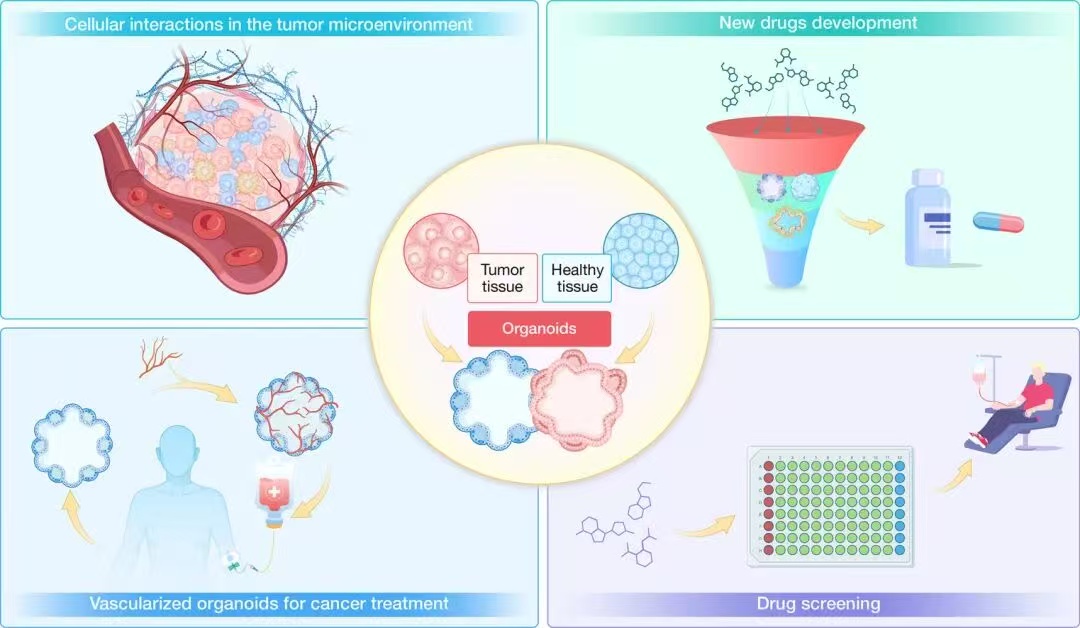
引用:
Zhang Y, Liu M, Xie N, et al. Cancer research revolutionized: Unveiling the power of organoids and their therapeutic potential in oncology. hLife 2025; 3: 216–236.
4. Mucosal vaccine development for respiratory viral infections
(Volume 2 Issue 2, Page 50–63)
通讯作者:林逸凡、傅阳心、彭华Mucosal vaccines have risen to prominence in the coronavirus disease pandemic due to their ability to elicit both local antibody and tissue-resident T cell responses, affording a dual-layered defense against infection and transmission at respiratory entry sites. While intramuscular vaccines predominantly focus on systemic immunity, mucosal vaccines offer a more nuanced, site-specific approach. However, the field faces a dearth of mucosal vaccine options for respiratory diseases, starkly contrasting to the extensive array of well-characterized injectable vaccines. The unique features of mucosal surfaces necessitate specialized adjuvants and delivery systems, adding complexity to adapting injectable vaccine technologies for mucosal applications. Here, we review the recent insights into the specificities of respiratory mucosal immunology that provide a foundation for future innovations besides the emerging vaccine platforms, newly discovered adjuvants, and vaccine delivery systems, which may open promising avenues for developing mucosal vaccines targeting respiratory pathogens.
引用:
Lin Y, Hu Z, Fu YX, et al. Mucosal vaccine development for respiratory viral infections. hLife 2024; 2: 50–63.
hLife | 破解耐药高毒力肺炎克雷伯菌:毒力因子与进化机制揭秘(Volume 2 Issue 12, Page 611–624)通讯作者:肖永红
本文系统阐述了耐碳青霉烯类高毒力肺炎克雷伯菌的重要毒力因子和进化整合的多种机制。由点突变、重组以及包括质粒、插入序列和原噬菌体在内的可移动遗传元件的转移所导致的高度可变的基因组,是耐碳青霉烯类高毒力肺炎克雷伯菌流行成功的关键因素。

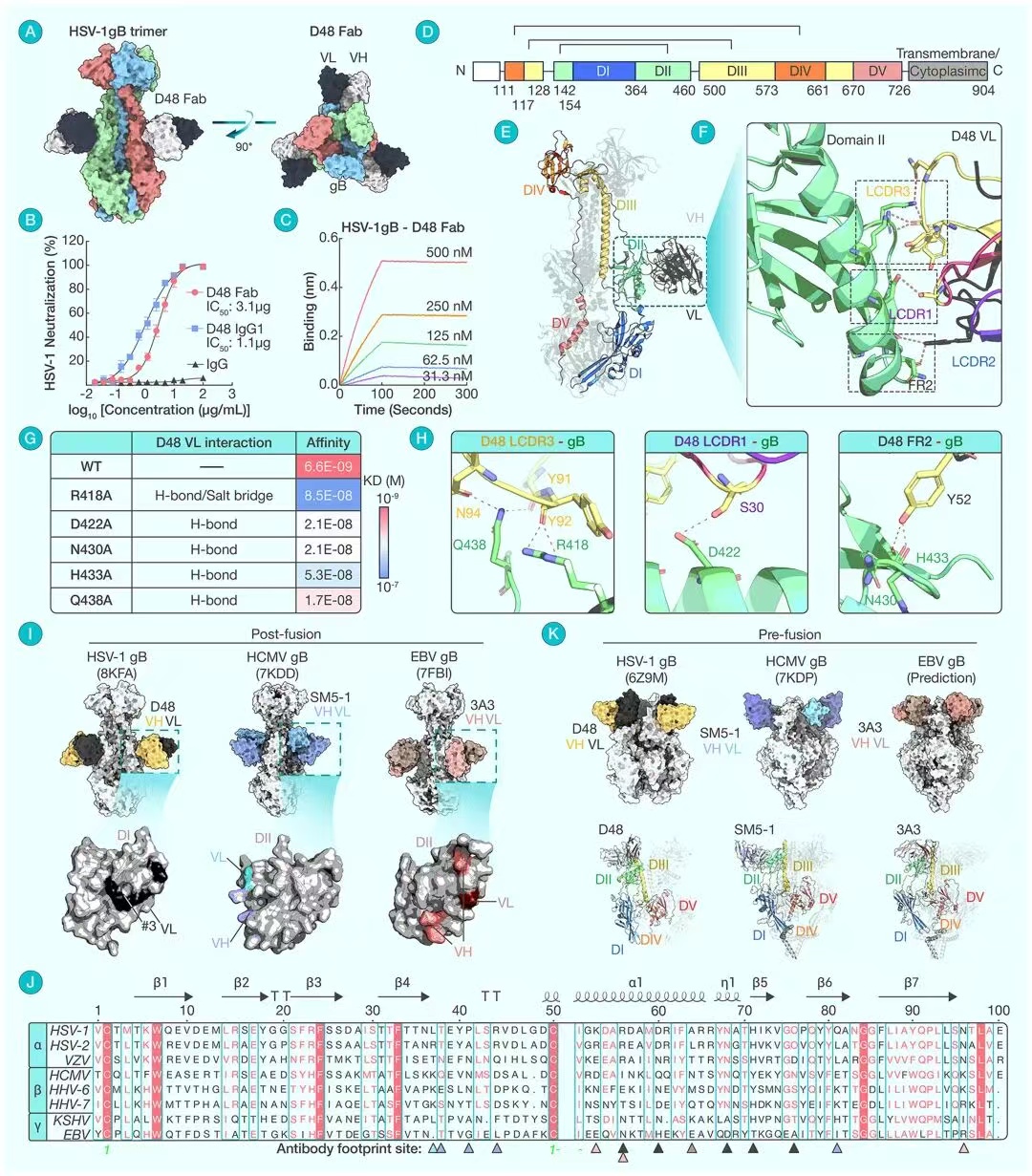
6. The structure of HSV-1 gB bound to a potent neutralizing antibody reveals a conservative antigenic domain across herpesviruses
hLife Letter | HSV-1 gB-中和抗体复合物结构揭示疱疹病毒潜在广谱中和结构域
(Volume 2 Issue 3, Page 141–146)
通讯作者:孙聪、刘铮、曾木圣本研究首次解析单纯疱疹病毒1型(HSV-1)gB与中和抗体复合物结构,提示疱疹病毒gB的DII结构域存在序列和结构上高度保守的抗原表位,为疱疹病毒广谱药物和疫苗研发提供重要的靶标。
引用:
Sun C, Yang JW, Xie C, et al. The structure of HSV-1 gB bound to a potent neutralizing antibody reveals a conservative antigenic domain across herpesviruses. hLife 2024; 2: 141–146.
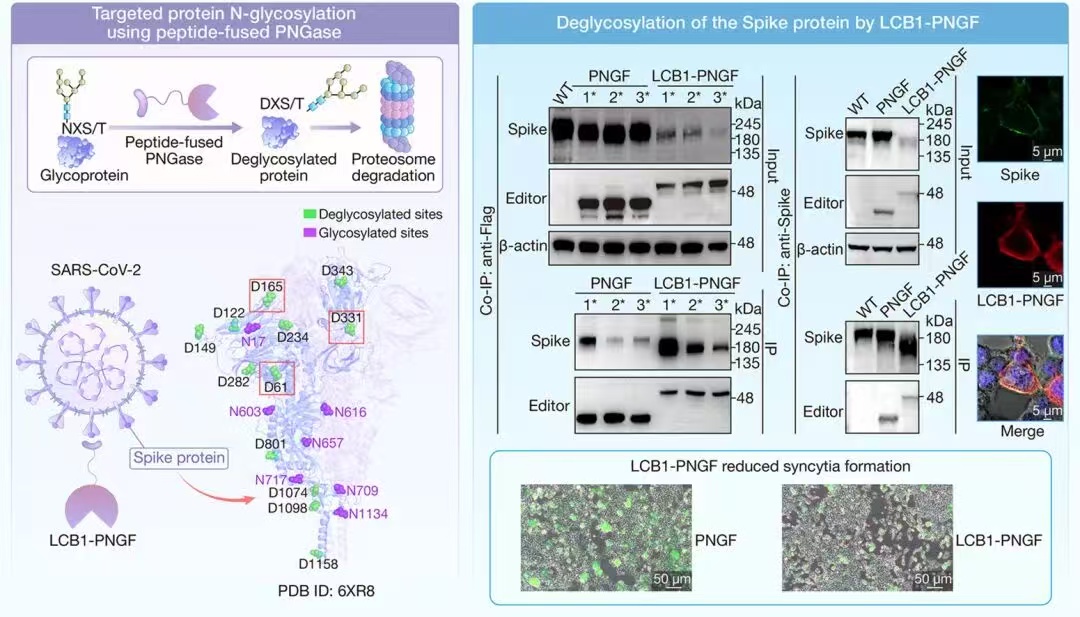
7. Targeted protein editing technique in living mammalian cells by peptide-fused PNGase
hLife Article | 蛋白质靶向编辑技术研发:成功实现新冠病毒刺突蛋白N-糖基化位点特异性编辑
(Volume 2 Issue 11, Page 576–591)
通讯作者:田朝光
该研究开发了一种靶向N-糖蛋白的蛋白质编辑技术,实现了在哺乳动物细胞中直接编辑目标糖蛋白的N-糖基化修饰位点,去除了天冬酰胺残基上连接的糖链并把天冬酰胺残基脱酰胺为天冬氨酸,导致蛋白质序列发生变化,进而影响蛋白质的功能、定位和稳定性。
引用:
Wu M, Bai G, Zhang Z, et al. Targeted protein editing technique in living mammalian cells by peptide-fused PNGase. hLife 2024; 2: 576–591.8. Evolutionary history and biological adaptation of Han Chinese people on the Mongolian Plateau
hLife Article | 刘超院士研究团队报道蒙古高原人群复杂演化历史及代谢相关遗传调控基础的时空演化轨迹
(Volume 2 Issue 6, Page 296–313)
通讯作者:王萌鸽、刘超、胡利平、何光林
基于规模性欧亚古今人群全基因组资源,该研究系统地解析了蒙古高原汉族人群的群体演化历史、生物适应性和医学相关性,揭示了脂肪酸和叶酸代谢相关基因的关键突变在五万年尺度下的时空演化轨迹,发现新石器时代农业相关生业模式转变对代谢基因遗传多样性分布模式的显著影响。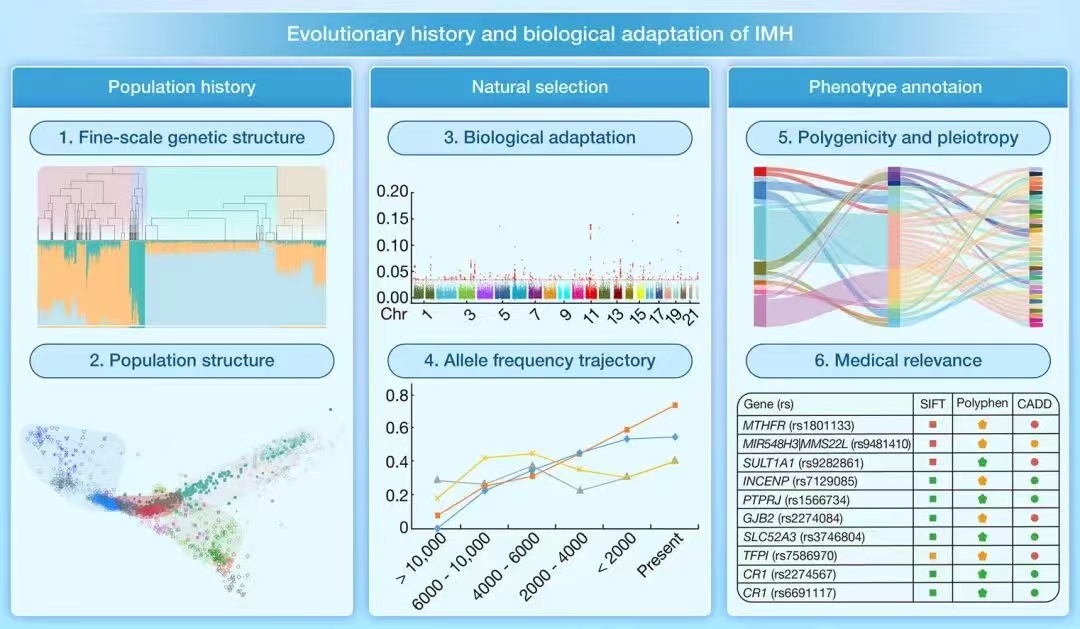 引用:Li X, Wang M, Su H, et al. Evolutionary history and biological adaptation of Han Chinese people on the Mongolian Plateau. hLife 2024; 2: 296–313.
 hLife Article | 深圳大学张素平研究团队获得一种靶向新冠病毒关键表位的中和抗体
(Volume 2 Issue 3, Page 126–140)
通讯作者:王岚峰、林正红、张素平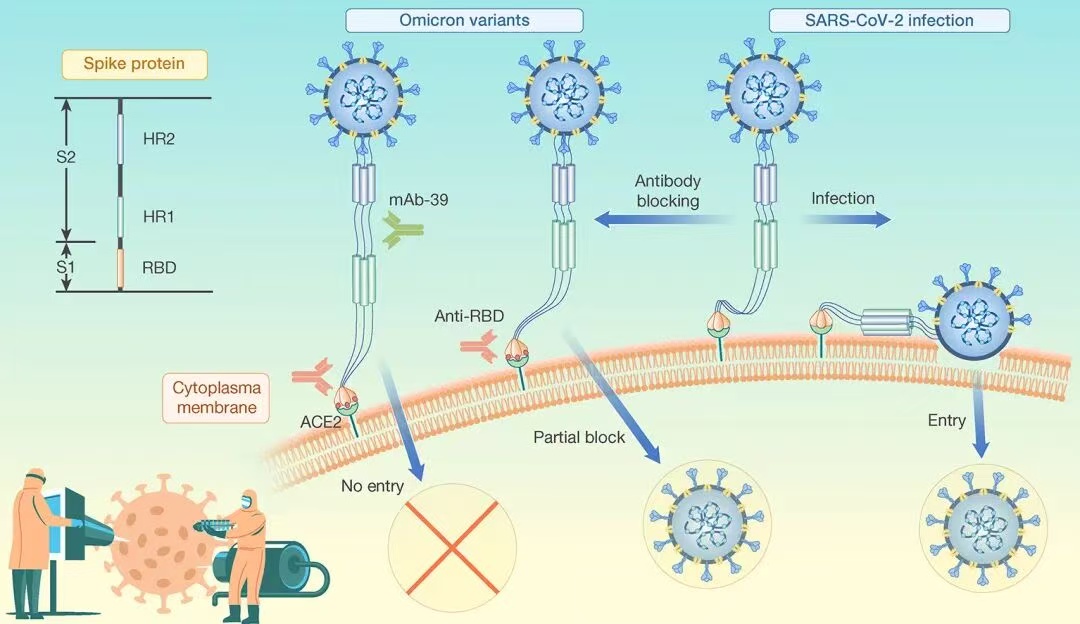
引用:
Su H, Zhang J, Yi Z, et al. A human monoclonal antibody neutralizes SARS-CoV-2 Omicron variants by targeting the upstream region of spike protein HR2 motif. hLife 2024; 2: 126–140.
10. Fecal microbiota transplantation in clinical practice: Present controversies and future prospects
hLife Review | 肠菌移植疗法的应用困境及破局之法
(Volume 2 Issue 6, Page 269–283)
通讯作者:陈启仪、秦环龙本文结合国际上最新发布的FMT临床试验结果和上海十院肠道微生态诊疗中心近万例临床实践数据,开创性提出了FMT疗法对肠内和肠外疾病的治疗响应规律,重点讨论了当前FMT临床应用中所存在的争议以及治疗过程中影响患者预后的关键因素,详细探讨了大数据平台对于现状的“破局”作用以及临床应用中的实践结果和未来前景。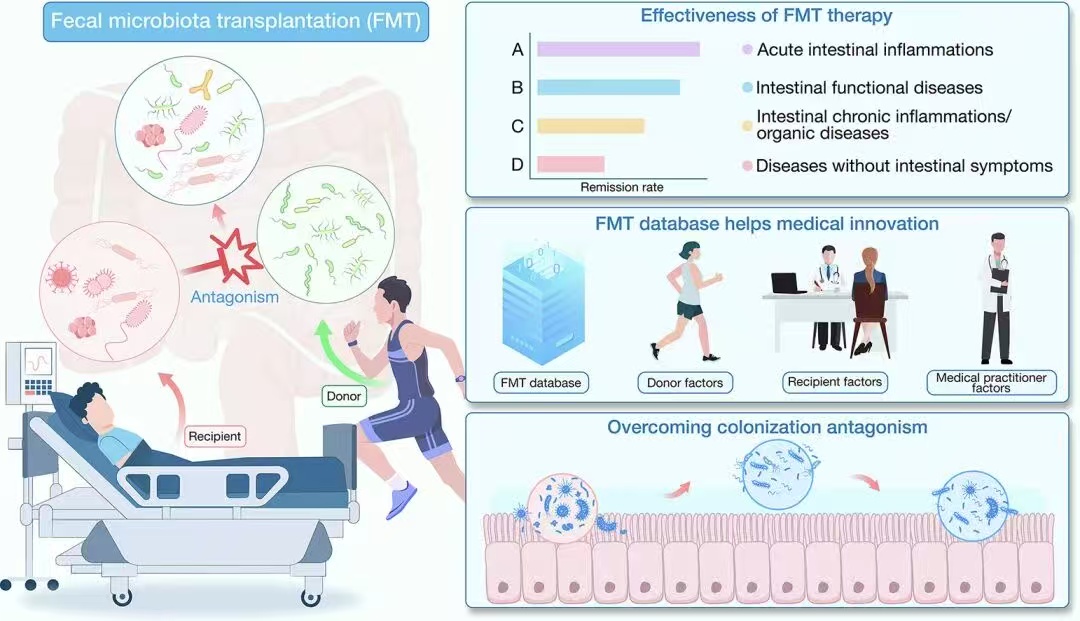 引用:Tian H, Wang X, Fang Z, et al. Fecal microbiota transplantation in clinical practice: Present controversies and future prospects. hLife 2024; 2: 269–283.
 期刊简介
hLife 由高福院士、董晨院士和Jules A. Hoffmann教授(2011诺奖获得者)领衔,是中国科学院微生物研究所主办,中国生物工程学会,浙江大学陈廷骅大健康学院,西湖大学医学院,上海市免疫治疗创新研究院和广州霍夫曼免疫研究所联合支持,与国际出版商爱思唯尔合作的健康科学领域综合性英文期刊。
hLife 聚焦健康科学领域的前沿进展,旨在促进基础研究与临床应用的融合发展。期刊发表与医学相关各研究领域最新成果,学科领域包括(但不限于)病原生物学、流行病学、生理学、免疫学、结构生物学、疾病监测、肿瘤、药物、疫苗和健康政策等。
hLife是一本金色开放获取期刊,月刊出版;2022年成功入选“中国科技期刊卓越行动计划高起点新刊”;2023年11月正式创刊;2024年5月被DOAJ收录;2024年8月被Scopus收录;2024年10月入选“首都科技期刊卓越行动计划——重点英文科技期刊支持项目”;2025年6月入选北京市科委“2025年度支持高水平国际科技期刊建设-强刊提升”项目;2025年8月入选中国科学引文数据库(CSCD)核心库;2025年10月被收录为“中国科技核心期刊”(CSTPCD);2025年11月首次入选《中国英文科技期刊海外媒体传播影响力报告》并获评生物医学领域与临床医学领域Top10。
hLife实行高标准与高效率并重的同行评审机制:
投稿至给出“是否送审”决定⏰1天
投稿至给出“首轮审稿”决定⏰28天
投稿至给出“是否录用”决定⏰61天
2026年前hLife接收的稿件免收文章处理费(APC)。
https://www.sciencedirect.com/journal/hlife
https://wap.sciencenet.cn/blog-3552961-1521953.html
上一篇:hLife 2026年第一期正式出版
下一篇:hLife Community 研究进展 | 曾木圣/孙聪/刘铮团队发现γ疱疹病毒广谱中和抗体并解析其保守表位(Natu
